BLOG · SPONSORED BY ADOBE EXPRESS
5 Social Media Strategies for Brand Marketers in 2026
From the author of The End of Marketing — how brand marketers, not creators, should approach social media when AI has made everything sound robotic and organic reach is dying.
Watch on YouTube.
Most brand marketers in 2026 are doing the social media equivalent of Tom Hanks talking to Wilson the volleyball in Cast Away. We have billion-dollar brands. Millions of followers. And almost nobody actually sees the content — because the algorithms want us to spend money to amplify it.
The fix isn't more content. It isn't more ads. It's a different approach. Here are the five social media strategies that work for brand marketers in 2026 — the ones I'd implement if I were sitting in a CMO seat right now.
Tip 1
Humanize Your Brand Through People
Brand marketers are hiding behind their logos. That's the problem.
AI has made social media robotic. Walk through any LinkedIn feed and you'll spot the same patterns — emoji headers, "delve into," recycled hooks, identical company-page voice. People can tell.
The unlock isn't producing more content. It's producing more human content. People connect with people, not with logos. They don't want to hear from Nordstrom's logo — they want to hear from a stylist at Nordstrom's. They don't want to hear from Salesforce's brand account — they want to hear from the actual people working there.
This is why influencer marketing works. This is why creator marketing works. People are the medium. The brand is the message.
The fix for brand marketers in 2026: make people the face of your brand. Identify the humans inside your company who can show their face and voice. Trickle the brand story down through them. Stop posting from the corporate handle and start posting from the people.
Tip 2
Founder- and Executive-Led Content
"Build in public" is the Gen Z version of behind-the-scenes. It's also the most underused brand marketing tactic in 2026.
Brand marketers love to hire ghostwriters to write executive blog posts. Nobody reads them. Nobody trusts them. Nobody clicks them. The CEO didn't write it. The CEO doesn't believe it. The audience can tell.
Compare that to an executive who grabs their phone, talks for 90 seconds, and posts a real take on the company's direction. That's distribution. That's trust. That's leverage.
Consider Oracle's recent layoffs — announced by mass email. Terrible look. Now imagine if Oracle's CEO had grabbed their phone and said: "We have hard decisions to make today. We're laying off 10% of our workforce. It sucks. Here's what I want every affected employee to know." That's real empathy. Not the fake kind we saw during COVID and BLM, when brands posted black squares and ran identical press releases as every other company.
The brands that will win in 2026 are the ones whose executives are willing to talk like humans on camera. Yes, you'll get some haters. You'll also get more reach, more awareness, more trust, and more business.
Tools mentioned in this video
Adobe Express is the sponsor of this article. The link below goes directly to their site — no affiliate tracking.
Adobe Express
SPONSOREDOne of the biggest problems brand marketers face today is content bottlenecks. You have the idea. Turning it into graphics, clips, thumbnails, and social posts takes forever. That's why Adobe Express has become part of my workflow — it helps me execute ideas fast without overcomplicating the process. Templates for every social platform, AI-powered design assistance, and a brand kit that keeps your team's output consistent.
Try Adobe Express — FreeTip 3
Entertainment Is the New Marketing
Write this down: edutainment. Education meets entertainment.
People don't want to be sold to. They want to be engaged. When someone opens a social app, they're not hunting for ads — they're trying to disconnect, learn something, or be inspired or entertained.
If you can combine inspiration + education + entertainment in a single post, you've won half the battle. If you're just selling, you've lost them — that's exactly why your reach is so low.
For B2B brands: teach your audience how to use your tools and services to make more money and reach more people. Not vague "thought leadership" — concrete how-tos.
For consumer brands: teach. When I led social media for Winn-Dixie supermarkets years ago, we used the platforms to publish recipes, shopping lists, and budget-meal guides. We weren't selling. We were teaching. The buying followed naturally.
The shift for 2026 brand marketers: stop posting sales-based content. Start mixing in genuine education. Make it entertaining. The reach, the shares, and the buys all follow.
Tip 4
Build Community
Somewhere along the line, marketers got twisted by the phrase "content is king." It's exhausting to hear it at every conference. Yes, content matters. Content is oxygen for a brand online.
But without community, you have nothing.
If people aren't paying attention to your content, you're wasting time. That's why every DM that comes in deserves a response. Every person engaging with your posts deserves acknowledgement. Every super fan deserves to be identified and rewarded.
Most brand marketers report vanity metrics — likes, shares, comments — to their executives. The metrics that actually matter: Who are our most engaged fans? What are they talking about? What are we doing for them?
Reward them. Send them something. Give them a free month, 90 days, an exclusive event invite. Create incentives that deepen the relationship.
And critically — pay attention to what your community is talking about. Brands treat social as a one-way broadcast channel. Follow the people who follow you. Drop into their conversations. When Marriott follows a customer and starts engaging when they ask for travel tips, that customer remembers it for life.
People buy from people. People trust people. People follow people. Brands that join the conversation — not just broadcast at it — become real communities.
Tip 5
Operate Like a Media Company, Not a Brand
In 2026, your brand needs to cast a wider net.
Stop thinking of yourself as a brand on Facebook. Start thinking of yourself as a media company that happens to sell a product.
Have a podcast. Have a newsletter. Have a YouTube series. If you don't have internal resources, hire content creators who can embody your brand and live the values you want to project.
In The End of Marketing, I predicted that at some point Whole Foods would essentially become a roster of health-and-wellness content creators, and Nike would transition from "a check on sneakers" to a content brand teaching lifestyle and fitness. We're getting closer.
Apply the model to your business: your company should have a podcast — figure out the voice and the angle. Your company should have an email newsletter — daily, weekly, or monthly, built around value, not promotions. Your company should have a YouTube series or a recurring video format. Owned video beats rented social.
When you operate like a media company, you stop being just a brand. You become a presence. People listen to you at the gym, in the car, on flights. That's the halo effect that drives follows, views, and purchases over 12 months.
Here's what those "repeatable systems" look like in practice. In this short Adobe Express tutorial, I walk through the 3-feature workflow that lets brand teams ship on-brand content at scale — without dragging your design team into every post.
Brand Kit once. Template forever. Schedule across every channel. That's how a brand stops thinking like a brand and starts operating like a media company — without burning out the team or sacrificing visual consistency.
From the author of The End of Marketing
The book behind this article
Carlos's bestselling book — subtitled Humanizing Your Brand in the Age of Social Media and AI — is the foundation of every theme in this article. The Tom Hanks/Wilson analogy, the "humanize through people" framework, the Whole Foods/Nike media-company prediction — all of it traces back to the book. Written in 2019. More relevant in 2026 than the day it published.
Get The End of Marketing on Amazon →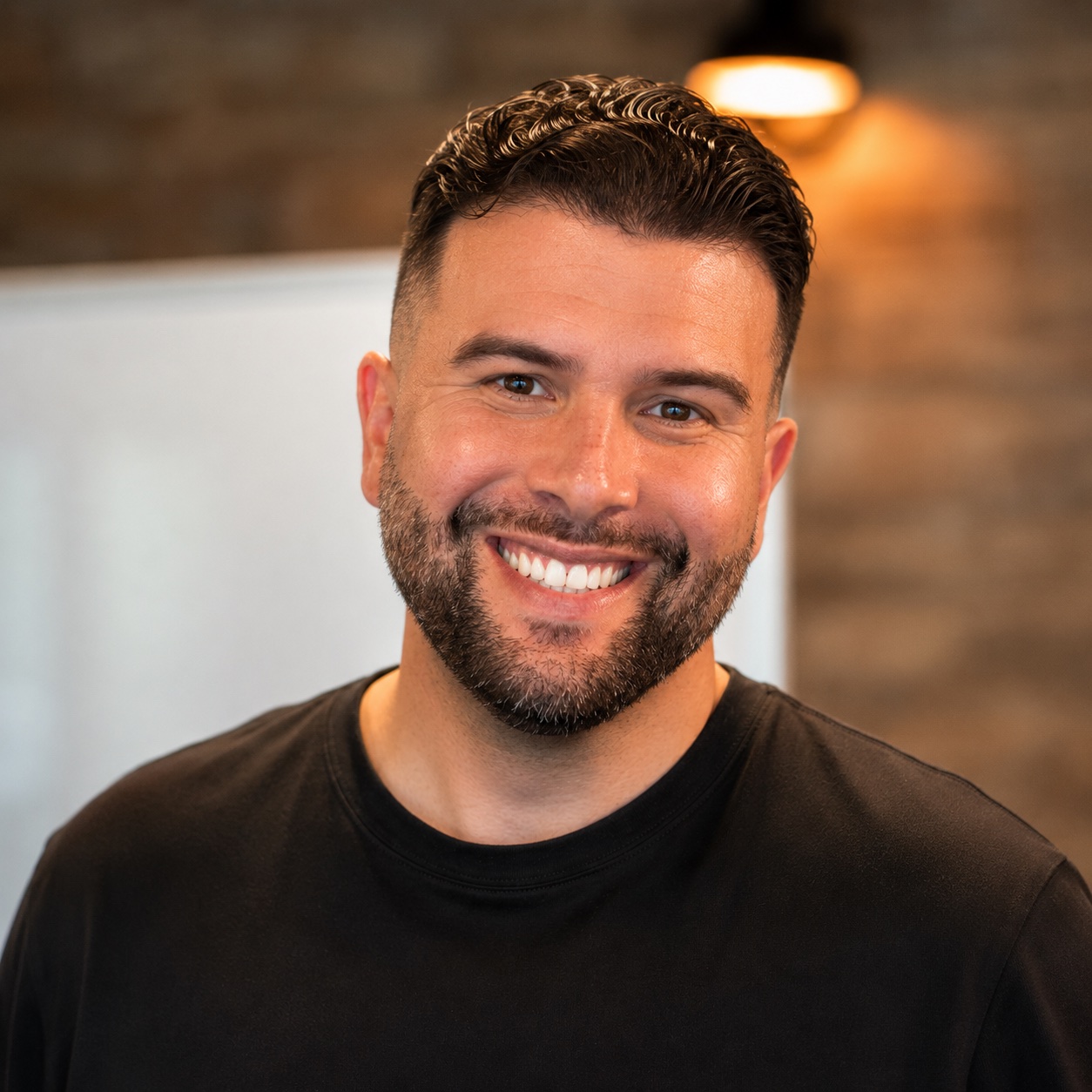
About the author
Carlos Gil
Marketing thought leader, LinkedIn Top Voice, bestselling author of The End of Marketing, and Editor-in-Chief of BestStacked.com (AI tools) and BestSends.com (email infrastructure).
More from Carlos →Article #2 in the series
The Adobe Express social media series
This is article #2 of 5 in the Adobe Express social media series. Article #1 is the creator-focused playbook. Article #3 is what to avoid. Article #4 is the toolkit. Article #5 is the LinkedIn growth playbook.
Article #1
5 Social Media Tips for Creators in 2026
Article #2 · You're here
5 Social Media Strategies for Brand Marketers in 2026
Article #3
The 5 Biggest Social Media Mistakes to Avoid in 2026
Article #4
5 AI Tools I Use Every Day for Social Media in 2026
Article #5
5 Ways to Grow on LinkedIn in 2026